
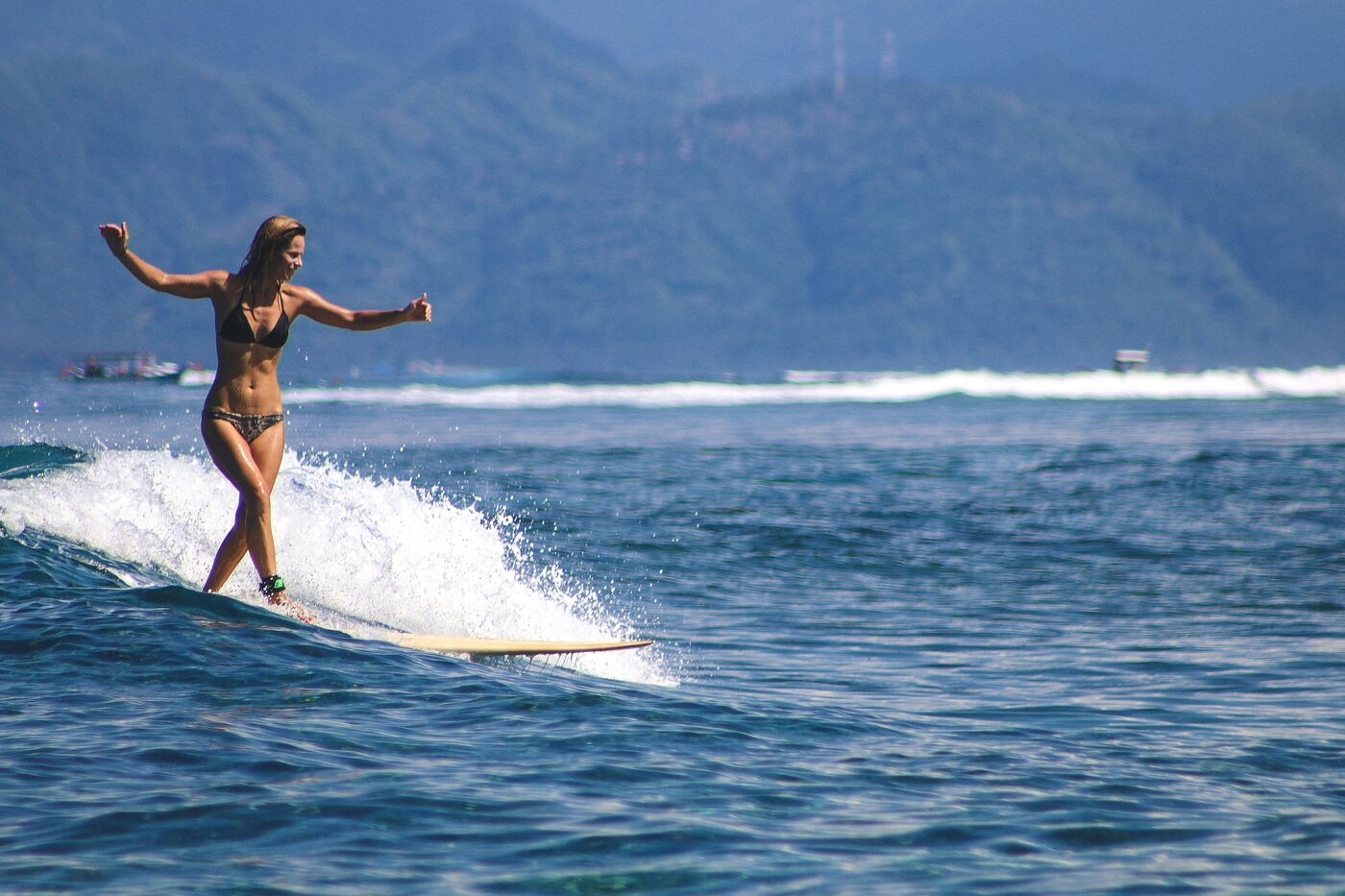
Finding a partner who truly gets the surfing lifestyle — the 5am alarms, the sand in the car, the constant eye on the swell forecast — isn't easy on mainstream dating apps. But it's entirely possible when you know where to look and how to show up. These surf dating tips cover the full picture: what works in the lineup, what to put in your profile, how to plan a first date that doesn't feel awkward, and what real surf compatibility actually looks like in a long-term relationship.
Start Where You Already Are — The Lineup
The ocean is already your social life, even if you haven't thought of it that way. Every session puts you in close proximity with people who share your most defining interest. You've already cleared the biggest hurdle: showing up. The lineup is one of the few places where striking up a conversation feels completely natural, because you have an immediate, undeniable common ground.
Surfers connect over shared experience — the set that caught everyone off guard, the wipeout you both watched, the moment the bank shifted and the rights got perfect. You don't need cheesy openers. Comment on the conditions, ask about someone's board setup, or simply share a laugh after a close call in the impact zone. These small exchanges are how genuine surf friendships (and more) start. If a connection feels easy in the water, it's worth seeing how it goes on dry land.
That said, always read the room. Someone deep in focus before a session isn't looking for conversation. Someone paddling back to the beach after a long ride, smiling — that's your moment. Surf culture prizes respect above almost everything else. Approach with that same energy and you're already ahead.
Why Surf Dating Sites Beat Tinder for Surfers
General dating apps match on photos and proximity. That's fine for finding someone in your postcode — it says nothing about whether they'll understand why you cancelled Saturday plans because a swell window opened up. Surf-specific platforms like SurfersMatch match on lifestyle: swell forecasts, beach culture, pre-dawn paddle-outs, and the particular joy of a glassy morning when no one else is awake.
That shared context changes everything. Conversations don't start with "so what do you do?" — they start with "where do you usually surf?" or "are you more of a longboard or shortboard person?" Those questions carry real information. They filter out incompatible people instantly, without anyone having to explain themselves. You're not defending your weekend choices to someone who thinks 6am is unreasonable. You're comparing notes with someone who probably set the same alarm.
What to Put in Your Profile
Your profile is your first impression, so make it count. A few specifics that signal you're the real deal:
- Dawn patrol. Mention it if it's genuinely part of your life. It signals commitment to the sport and filters for people on a similar schedule.
- Your local break. Name it. It tells someone exactly where you're coming from — geographically and culturally. Locals know locals.
- Your board setup. Shortboard, mid-length, longboard, foil — each attracts a slightly different crowd and gives people a talking point.
- What wave you're chasing. Hollow and fast? Cruisy point breaks? Beginner-friendly beach breaks? This says a lot about your personality, not just your skill level.
- Honest skill level. Overstating ability is one of the fastest ways to start something on a false note. Beginner, intermediate, advanced — just be real. The right person will match you regardless.
- An action shot or a beach photo. You in your element. It doesn't need to be professional. A friend's phone shot from the beach works perfectly.
The Art of the First Message
Generic openers get generic responses — or no response at all. Surfers appreciate directness and authenticity over performed enthusiasm. "Hey, you seem cool" lands flat. "What break is that in your photo?" opens an actual conversation.
Reference something real and specific from their profile. If they mention surfing a particular spot, ask how it's been lately. If they list a board brand, ask how they like it. If their profile mentions chasing a specific type of wave, ask where they've found the best of it. These aren't tricks — they're genuine questions that communicate you actually read what they wrote, and that you're curious about their experience rather than just their appearance.
Keep the first message short. Two or three sentences with a real question at the end is plenty. Give them something easy to respond to, and let the conversation build from there.
Planning Your First Surf Date
Skip the dinner-and-drinks template. You have something far better available to you. For a first surf date, go to a spot you know well — somewhere you're comfortable and can focus on the conversation rather than navigating unfamiliar conditions. Paddle out together, let the waves do the talking, and let the shared experience create natural moments of connection.
Keep the pressure low. You're not performing; you're just surfing with someone new. The ocean handles the conversation gaps better than any bar could. If the swell is flat, pivot: grab coffee at a surf shop, walk the beach, watch the ocean from the sand. The shared context is still there — you're not scrambling to fill silence with small talk, you're watching the water together and talking about what you see.
One practical tip: suggest a shorter session for the first meet-up. A two-hour paddle-out is less intimidating than a full-day surf trip, and it leaves room for "want to grab food after?" — which is how a lot of good first surf dates end.
Long Distance Surf Relationships
Many surfing couples meet far from home. A winter trip to Bali. A surf camp in Portugal. A coaching week in the Canaries. Surf travel puts you in close quarters with people who have chosen the same destination for the same reason, and those shared trips create fast, real connections.
Don't dismiss a connection just because it started somewhere else. Be open to long-distance in the early stages — at least long enough to find out if the connection is real. If it is, you'll quickly discover that coordinating visits around swell windows turns travel planning into something both of you look forward to. A trip to see each other becomes a surf trip. A surf trip becomes a reason to visit. That's a different kind of long-distance relationship than most people navigate.
Join 5M+ members — find yours on SurfersMatch
Create your free profile, set your break, and connect with surfers who are looking for exactly what you are.
Join Free TodayRed Flags to Watch For
Not every match is a good match, even on a surf-specific platform. A few things worth paying attention to early:
- "I love the beach" but has never surfed. This might be perfectly fine — some non-surfing partners are completely supportive of the lifestyle. But it's worth understanding early whether they see your surfing as something they're happy to accommodate, or something they'll resent competing with.
- Talks badly about other surfers in the lineup. Occasional frustration with a drop-in? Understandable. A persistent pattern of dismissing or putting down others in the water? That's a personality trait, not a surf opinion.
- Doesn't respect surf etiquette. The unwritten rules of the lineup — waiting your turn, not snaking waves, not paddling through someone's ride — exist because surfing requires mutual respect to work. Someone who regularly ignores those rules probably has a similar relationship with other people's boundaries in general.
- Reschedules plans when conditions get good, then resents when you do. Surf schedules are unpredictable. A partner who applies one rule to themselves and another to you is worth noticing.
The Honest Truth About Surf Compatibility
Surfing is a demanding lifestyle. Dawn sessions mean early bedtimes. Last-minute swell windows mean last-minute plan changes. Weekends get consumed by forecast-watching and tide charts. Travel windows open and close around conditions, not around convenience. None of this is negotiable — it's what the sport is.
A partner who surfs understands all of this without you having to explain it. They're not waiting to be convinced that 4:45am is worth it. They already know. They've been doing it for years. That shared understanding removes a layer of friction from the relationship that non-surfing couples have to constantly manage.
That's the real case for surf-specific dating. It's not just about finding someone who tolerates the lifestyle — it's about finding someone who sees early mornings, last-minute road trips, and windswept beach towns as romance rather than inconvenience. Those people exist. SurfersMatch is where they are.
Ready to Find Your Match?
The lineup has always been a social space, but it's not the only place to find someone who surfs. SurfersMatch connects members across every break, every skill level, and every corner of the world. Whether you're looking for a local paddle partner or a long-distance connection to plan trips around, the right starting point is a profile that shows exactly who you are — board, break, and all.
Set up your profile in minutes. Tell people about your local break, your skill level, what wave you're chasing, and what you're looking for. The rest follows naturally — because when the foundation is surf, the conversation always has somewhere to go.