
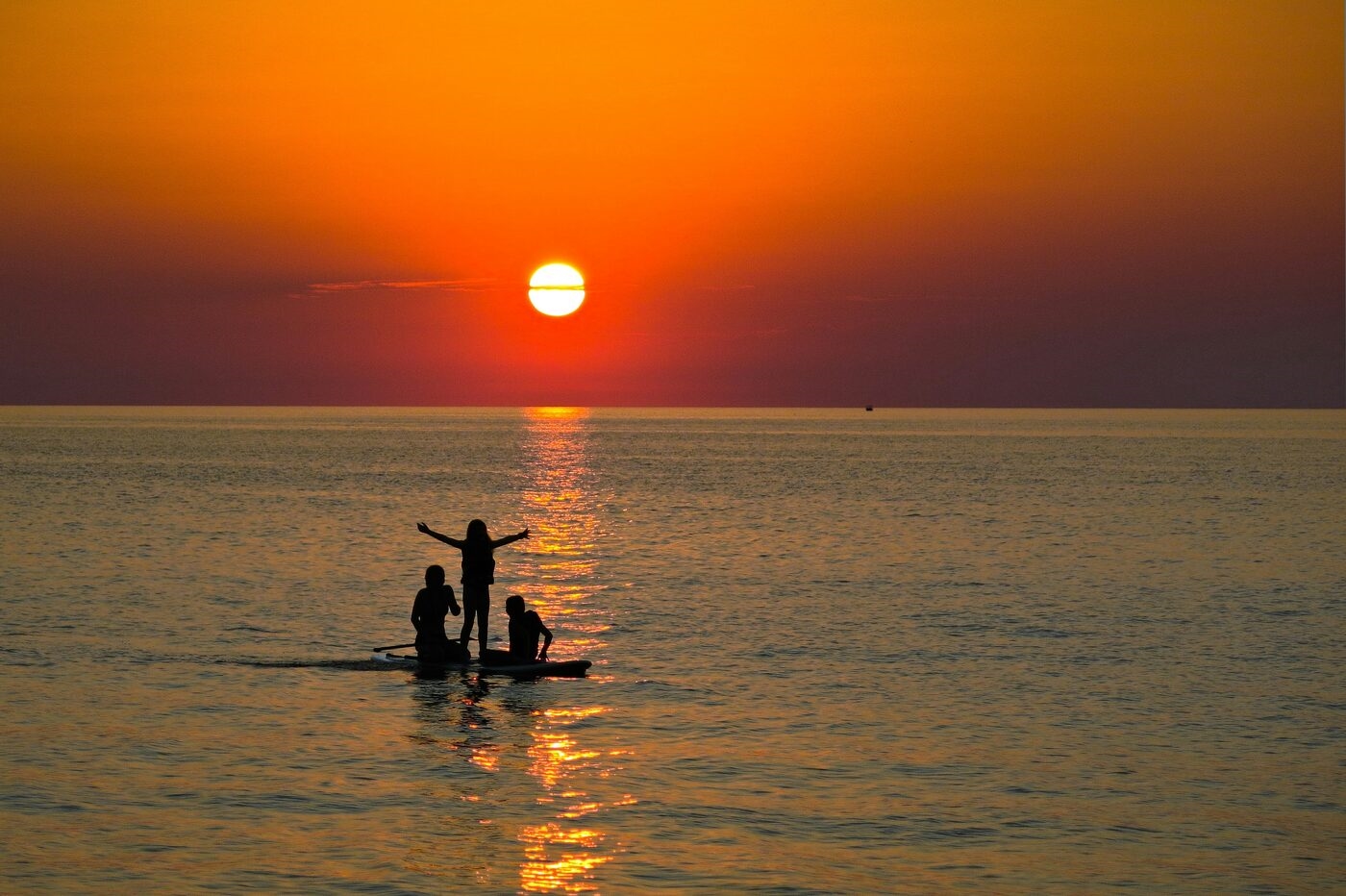
The lineup is social, but it's not always the easiest place to meet someone new. You're focused on waves, positioning, and not dropping in on the wrong person. Reading the sets, managing priority, staying out of people's way — there's a lot going on out there. Conversation happens, but it's incidental, and the conditions aren't exactly designed for making a genuine connection.
For single surfers who want to build real community — and maybe find someone worth sharing the water with — the answer usually lives somewhere else. Here's where the actual connections happen.
Local Surf Clubs — The Original Community
Every serious surf region has clubs. In the US, many are affiliated with the Eastern Surf Association or the National Scholastic Surfing Association. In Australia, Surf Life Saving clubs are woven into coastal culture at a level that's hard to overstate. Across Europe — the UK, France, Portugal, Spain — local clubs organize around specific breaks and regions, running everything from beginner sessions to competitive events.
Club membership means regular sessions, competitions, beach clean-ups, and social events throughout the year. The format matters: you see the same people repeatedly, week after week, season after season. That repetition is how real bonds form. Show up consistently, help with events, bring the right energy, and within a season you'll know half the local surf community by name — and they'll know you.
For single surfers, clubs are one of the most underrated social environments that exist. The shared activity removes the awkwardness of standard social situations. You're already doing something together. The conversation comes naturally.
Surf Camps — Concentrated Intensity
Surf camps compress months of community building into a week. You're up early together, sharing meals, watching each other progress in the water, and talking about surfing from the moment you wake up until you fall asleep sunburned and satisfied. The shared experience accelerates connection in a way that normal social settings rarely do.
Camps at popular destinations — Ericeira in Portugal, Taghazout in Morocco, Bali in Indonesia, Nosara in Costa Rica — attract people from around the world who have surf as their entry point. The international mix is part of the appeal. You'll meet people you'd never cross paths with at home, and surf is the immediate common ground.
Long-term friendships — and more — come out of these trips regularly. Single surfers who travel to surf camps consistently report meeting people they stay connected with for years afterward. The intensity of the week creates a kind of bond that a handful of casual encounters simply doesn't produce.
Online Forums and Subreddits
r/surfing on Reddit has hundreds of thousands of members. Surfline's forums have been active for years. Magicseaweed, Swellnet, and other forecast platforms have community features built in. These aren't dating platforms, but they're places where surfers congregate daily — to argue about equipment, share footage, ask for break recommendations, and organize trips.
Relationships develop in these spaces more naturally than you'd expect. A local meet-up organized through a regional subreddit, a surf trip put together through a Facebook group for a specific destination, a friendship that starts in a forum thread about board shapes — these things happen regularly. The communities are self-selected: the people who spend time in surf forums are, by definition, people who think about surfing a lot. That's a reasonable filter.
These spaces also tend to be geographically oriented. Searching for regional groups — your city, your break, your coastline — surfaces the people who are actually nearby and paddling out at the same spots you are.
Instagram and Surf Content Communities
The surf world lives on Instagram. Local breaks have their own accounts. Photographers who shoot specific spots build followings from the people who surf those spots. Surf brands, coaches, and instructors cultivate communities around their content. Tagging sessions, following local surf accounts, engaging with the people who comment on the same posts you comment on — this isn't structured dating, but it's community.
People connect through shared content, DM about wave conditions, and sometimes meet up. It's organic rather than deliberate, and it moves slowly. But for surfers who are already active on social media for surf-related content, it's a real channel. The connections that come out of it tend to feel natural precisely because they developed without any intentional social effort.
The limitation is reach. Instagram connects you to people who follow the same accounts, which tends to be a local or regional group. It's great for deepening community in a place you already surf; it's less useful for finding surfers in a new city or country.
Find Your Surf Community on SurfersMatch
Join 5M+ members worldwide — whether you're looking for a partner, a surf buddy, or people who just get the lifestyle.
Join FreeTravel as Community Building
For single surfers without a strong local community — whether they've just moved, or their local break simply doesn't have the social culture they're looking for — travel changes everything. Going to a known surf destination puts you in an environment where everyone shares your reason for being there.
The Algarve in October. The Gold Coast in summer. Oahu's North Shore in winter. Biarritz during the season. In these places, at the right time of year, the hostel common rooms, the surf school groups, the post-session coffees, and the shared parking lot conversations become community instantly. Everyone is there for the same thing. The usual social barriers don't apply the same way.
Traveling to surf is one of the most reliable ways to expand your social world as a surfer. The people you meet on a good surf trip often become the foundation of a broader network — people who know people, who know other breaks, who connect you to communities in places you haven't been yet.
SurfersMatch — Built for This
All of the above work. But they're also slow. Clubs take time — you have to show up consistently for months before you're really embedded. Surf camps require planning a trip. Reddit is broad. Instagram is passive. None of them are optimized for the specific goal of finding someone you actually want to date.
SurfersMatch is the direct route: a dating and social platform built specifically for surfers, where the community is already there and the filter has already been applied. Whether you're looking for a partner, a surf buddy to explore new breaks with, or just people who understand why you rearrange your entire schedule around a swell — this is where single surfers in 100+ countries find each other.
The member base skews toward serious surfers — people who actually paddle out regularly, who plan trips around forecasts, who know their local break intimately. The conversations start with something real. You're not spending the first three dates explaining why you were up at 4:30am checking the buoys. That context is already shared.
Filters for location, experience level, and surf travel habits let you narrow toward people whose surf life actually aligns with yours — not just people who've been to the beach a few times. The match is built around the lifestyle itself, which means the connection, when it happens, tends to hold.
Combining Approaches
The best social life for single surfers isn't any one of these in isolation — it's the combination. A local club for consistent, repeated community. Surf trips and camps for new connections and expanded horizons. Instagram and forums for staying in the loop with the broader surf world. And SurfersMatch for intentional dating, when you're ready to be direct about what you're looking for.
None of these compete with each other. They serve different purposes and operate on different timescales. The club gives you depth in one place. Travel gives you breadth. Online communities give you reach. A surf-specific dating platform gives you intent — the directness that the other channels naturally lack.
Put them together and you've got the kind of rich surf community that most single surfers are actually looking for: people who know you in the water, people you've shared waves with halfway across the world, and people you've connected with because you were both looking for the same thing at the same time.
The lineup will always be social in its own way. But building the community you actually want takes a little more intention than waiting for the right person to paddle out next to you.